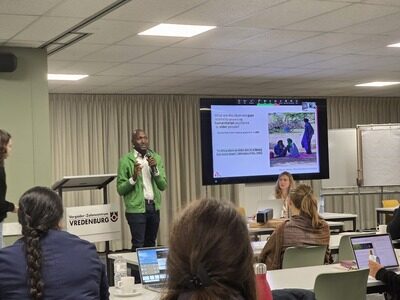
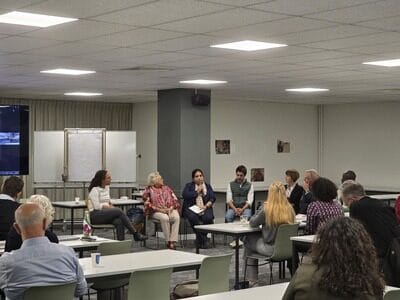
On 1 October 2025, on the occasion of the International Day of Older Persons, organised the Global Health Knowledge Centre (KCGH) together with Doctors Without Borders (MSF), HelpAge International and it Utrecht University Medical Centre (UMCU) it International Symposium on the Health Rights and Needs of Older People in Humanitarian Crises.
The symposium drew attention to the the often overlooked health and social needs of older people who are affected by conflicts, natural disasters or forced displacement. Despite their important role as carers, community anchors and sources of resilience, older people still too often face limited access to care, chronic conditions, social isolation and structural forms of age discrimination.
Age discrimination and the right to health
Speakers from, among others, the United Nations, WHO, MSF, HelpAge International and various universities discussed how ageism, knowledge gaps and donor priorities contribute to the invisibility of older people in humanitarian aid. In her keynote speech, she emphasised Claudia Mahler, UN Special Rapporteur on the human rights of older persons, that “The right to health does not disappear in times of crisis.”

From regions such as Lebanon, Latin America and the Sahel speakers such as Maya Abi Chahine (American University of Beirut), Javier Manrique (Convite, Venezuela) and Aissami Abdou (MSF Sahel region) examples of how older people are often excluded from medical care or aids, and how social exclusion increases their vulnerability. Rhea Tariq (HelpAge International) and Basem Shaher (Syrian Expatriates Medical Organisation – SEMA) discussed how a lack of specific funding and institutional attention further complicates the situation.
Practical experiences and solutions
MSF staff, including Ruth Kauffman and Favila Escobio, shared experiences from the field about the diverse care needs of older people in crisis situations – from sexual and reproductive health to palliative care. In addition, the WHO Integrated Care for Older People (ICOPE)-model, presented by Yuka Sumi, discussed as a promising approach for person-centred and integrated care in crisis situations.
Towards inclusion and dignity
By bringing together perspectives from humanitarian aid, elderly care, ethics and health systems, it became clear that structural changes be necessary – including minimum standards for elderly care in crises and the development of a possible UN Convention on the Rights of Older Persons.
The symposium was an important step towards greater inclusive humanitarian aid, in which older people are no longer invisible, but are recognised as full members of their community – with a right to care, dignity and involvement.
📰 Read the full blog post at Elburg van Boetzelaer on PLOS Global Health: Talking about Medicine:
👉 Symposium on ageing in crisis: Advancing the overlooked healthcare rights and needs of older people in humanitarian crises
 Dutch
Dutch English